

Live-in Care in Eastbourne — Full-Time Support, Without Moving Home
Live-in care puts a trained carer in the home full time, so support is there whenever it's needed rather than only at set visiting times. It's the closest alternative to residential care — the same round-the-clock reassurance, but in familiar surroundings, with the same routine, the same neighbours and the pets staying put.

What is live-in care?
Live-in care means a trained carer moves into the home and lives there, rather than arriving for set visits. They help with washing and dressing, medication, meals, shopping and getting out and about — and because they're there, they can respond to whatever comes up rather than only to what was scheduled.
Practically, the carer needs their own room and somewhere to make a hot drink. Like anyone, they're entitled to daily break time and a proper night's sleep, so we arrange cover for those hours — and if someone needs help through the night regularly, a waking night carer is a separate arrangement we can talk through.
Most people choose it as the alternative to moving into a care home. The support is comparable, but the house, the neighbours, the pets and the daily rhythm all stay exactly as they are.
Book a free care assessmentComplete Home Care Services in Eastbourne and East Sussex
Grace Care 24/7 offers personalised home care, elderly care, and 24-hour care solutions across East Sussex, helping people receive quality support in the comfort of their own home.

Visiting & Domiciliary Care
Planned visits from thirty minutes upwards. Help with getting up and dressed, meals, medication prompts, housework, shopping and settling safely in the evening.
Ask About Visiting Care
Live-in Care
A carer lives in the home, providing one-to-one support day and night. Often the alternative to a care home that families did not know was available.
Ask About Live-in Care
Personal Care
Washing, bathing, dressing, grooming, toileting and continence support, delivered with dignity and without rushing, while respecting individual routines, preferences and privacy.
Ask About Personal Care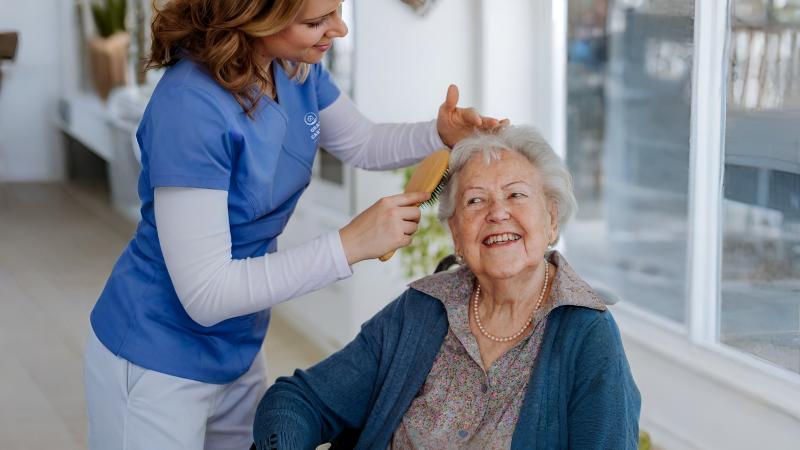
Overnight Care
Sleeping or waking night support for people who wake disorientated, are at risk of falls, or feel anxious alone.
Ask About Overnight Care
Respite Care
Cover so a family carer can rest, work, travel or recover, with dependable support in place at home.
Ask About Respite Care
Specialist Conditions Care
Dementia, Parkinson's, stroke recovery, physical disabilities, palliative support and hospital-to-home care.
Ask About Specialist Care
For people who need more than visits, but don't want to move.
Live-in care suits someone whose needs no longer fit into scheduled visits — where help is wanted at unpredictable times, where falls or wandering are a worry, or where being alone overnight has stopped feeling safe.
It also suits couples who want to stay together rather than be separated by a care home placement, and people who simply don't want to leave the house, the garden and the pets behind.
One practical thing: the carer needs a spare room of their own. Beyond that, the house carries on as it is.